- 615 Janopaul Ln. Modesto, CA
- info@stumpmfg.com
- (209) 596-4029
- Open Mon - Fri, 7am - 3:30pm
What fire departments need to know before specifying a flashover chamber — and how to commission a structure that performs under real training conditions.
A flashover chamber is a controlled fire training structure built to teach firefighters to recognize, read, and respond to the conditions that precede a flashover. Unlike a full burn building, the flashover chamber is purpose-built for a specific discipline: fire behavior observation and pre-flashover survival training.
The structure consists of two connected modules — an elevated burn chamber where Class A fires are set and developed under instructor control, and a lower observation area where trainees watch fire progression from below the thermal layer. Instructors manipulate roof vents, floor dampers, and side openings to guide the fire through rollover toward flashover, giving trainees a controlled, repeatable view of the conditions they’ll need to recognize on an actual fireground.
What makes the flashover chamber distinct is the specific skill it develops. Firefighters learn to read smoke, recognize thermal layering, identify rollover, and understand the indicators that signal a compartment is approaching rapid fire development. That’s the read — the one that buys a crew the seconds they need to get out or push back.
Stump Construction & Manufacturing designs and builds custom flashover chambers for fire departments, training academies, and multi-agency training facilities. Every structure is built to NFPA 1403 standards. Whether you need a standalone unit or a flashover chamber integrated into a larger fire training facility, we build it to your specs.
No two departments run flashover training the same way. Trainee group size, site constraints, whether you’re running standalone sessions or sequencing flashover training into a larger program — all of it shapes what your chamber needs to look like. There’s no catalog item here. We spec the structure to the program.
Stump flashover chambers are custom-fabricated in heavy-gauge structural steel with high-temperature ceramic insulation rated for sustained live fire. Key design elements:
Capacity, site footprint, and integration with existing training infrastructure are all part of the design conversation before we produce a drawing.
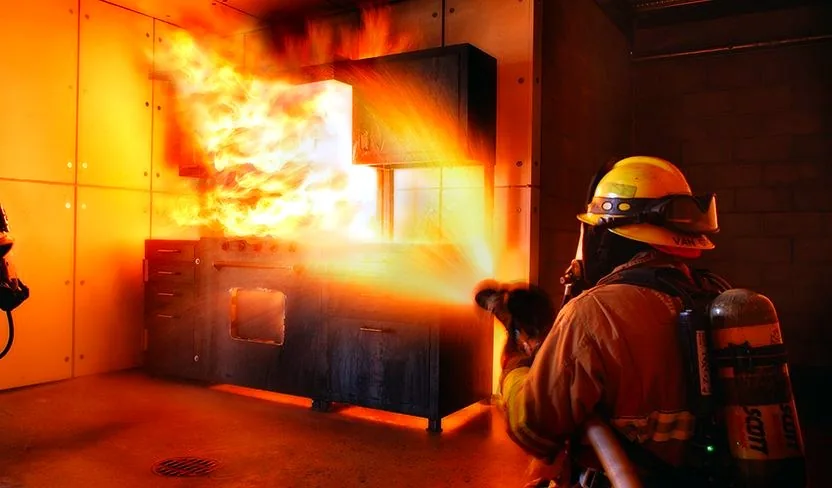
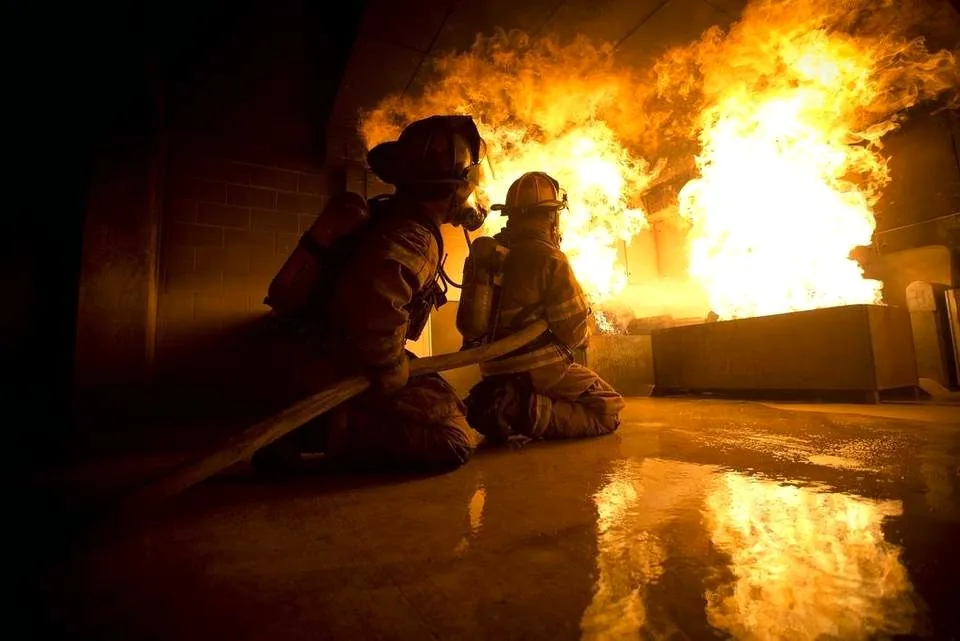
NFPA 1403 governs live fire training, and your flashover chamber needs to be built to meet that standard from the ground up — not retrofitted to it. Every Stump flashover chamber is designed and fabricated to comply with NFPA 1403 requirements. When your AHJ, insurer, or accreditation body evaluates your training facility, the structure is built to meet the standard — that’s the starting point, not an afterthought.
The standard sets requirements for fuel loading, ventilation management, safety officer positioning, water supply, and trainee-to-instructor ratios during live fire exercises. A flashover chamber that doesn’t account for these requirements creates gaps between how the structure was built and how it has to be safely operated. At Stump, NFPA 1403 compliance is embedded in the engineering — not added as a checkbox at the end.
For departments that rely on our broader overview of NFPA 1403 compliant fire training structures, the flashover chamber falls under the same standard and the same design discipline. Structures built to NFPA 1403 requirements are also frequently a prerequisite for grant eligibility. If your department is navigating FEMA SAFER, AFGP, or state-level funding programs, our guide to fire department grants covers what’s available and how departments have used those programs to fund training infrastructure.
A flashover chamber supports a focused set of training scenarios — and does them exceptionally well. Fire behavior observation is the core discipline, but the scenarios extend into several high-value areas:
Fire behavior and recognition: Trainees observe the full progression — incipient stage through rollover, thermal layering development, smoke behavior, and the indicators that precede flashover. This is the training that builds the fireground read.
Pre-flashover survival skills: When a compartment is approaching flashover, firefighters need a practiced response — when to push water, when to back out, when to call a mayday. The controlled environment of a flashover chamber lets departments build those responses through repetition before the situation is real.
Ventilation effects on fire behavior: Instructors can open and close ventilation points in sequence, showing trainees directly how air track changes fire behavior. This is foundational knowledge for modern ventilation-informed tactical decisions.
Instructor development: Flashover chambers are used to train and certify fire officers to recognize pre-flashover indicators, manage live fire training sessions safely, and deliver this training to incoming recruits.
Integration with a larger training program: For departments with adjacent live fire structures — custom burn buildings, training towers, or live fire training props — the flashover chamber adds a dedicated fire behavior component. Recruits can move from fire behavior observation through live suppression drills in a single training day.
Stump handles the complete project — design, engineering, fabrication, delivery, and on-site assembly. When you contact us, you’re talking directly to the engineers and fabricators who will build your structure. The people you’re talking to are the people responsible for your build.
The process starts with your training program requirements: scenarios you need to run, trainees per session, your site, whether this is standalone or part of a larger facility, and your budget range. From there, we produce a design, take it through engineering, and fabricate to spec at our facility in Modesto, CA. Pricing is based on project scope and complexity — and because we’re the manufacturer, there’s no middleman markup. You’re paying fabricator pricing directly.
Delivery and assembly are handled by our team. We’ve shipped and assembled fire training structures across the United States and internationally. The distance from our facility to your site is not a factor on a project of this scope.
If you’re navigating the budget approval process, our guide to fire department grants covers FEMA SAFER, AFGP, and state-level funding sources that fire departments have used to fund training infrastructure projects.
No sales process. No follow-up sequence. Just a direct conversation.
Or call us directly: (209) 596-4029
Mon–Fri, 7 AM – 3:30 PM PT
What does a flashover chamber teach that a standard burn building doesn’t?
A burn building is built for active suppression training — crews working the hose, performing search and rescue, operating ventilation. A flashover chamber is a dedicated fire behavior observation structure. Trainees are positioned in the observation module, watching a fire develop from rollover toward flashover under controlled conditions. The skill being built is the read — the ability to recognize what a compartment is doing and what’s about to happen. That skill is foundational to everything that happens inside a burn building.
Can a flashover chamber be built as a standalone structure, or does it need to be part of a larger complex?
Either works. Standalone flashover chambers are common for departments that need dedicated fire behavior training capability and have the site for it. We also integrate flashover chambers into larger training facilities — adjacent to a burn building or tower — which lets departments sequence fire behavior observation and live suppression training in the same session. We’ll spec the configuration to fit your site and program.
What does NFPA 1403 compliance mean for a flashover chamber specifically?
NFPA 1403 governs live fire training operations and covers both how the structure is used and how it needs to be built — appropriate ventilation controls, access and egress, structural integrity to sustain live fire, and the physical setup needed to meet instructor-to-trainee ratio requirements. Stump builds every flashover chamber to meet NFPA 1403 requirements. What happens operationally — safety officer assignments, pre-burn inspections, fuel selection — is your department’s process. We give you the structure that makes compliant operations achievable.
Do you build mobile flashover chambers for multi-department sharing?
Yes. Trailer-mounted configurations are available for departments that want to share the resource with neighboring agencies. Mobile units include the same ventilation controls, insulation, and structural integrity as fixed installations, designed for road transport and on-site setup. We design to your transport requirements — road weight limits, setup crew size, site access — as part of the initial spec conversation.
How is pricing determined?
Pricing is based on scope and complexity — configuration, capacity, site requirements, mobile versus fixed, and whether you’re integrating with an existing facility. Because we’re the manufacturer — not a broker — there’s no middleman markup. You’re paying fabricator pricing directly, and you’re talking to the people who build it, which means fewer surprises and cleaner execution from approval through delivery.
We’re comparing a few vendors — what makes Stump different?
When you work with Stump, you’re working directly with the engineers and fabricators building your structure — not relaying requirements through a sales rep to a manufacturer you’ll never speak to. Every structure is custom-built to your specs, NFPA 1403-compliant by design, and delivered and assembled by our team. Stump has completed 3,000+ projects across nearly every industry and material type. Our fire training structures are in use across the US and internationally. We’re a family-owned shop in Modesto, CA — and when you have a question about your build, you get an answer from the person who can actually answer it.
Can you install a flashover chamber at our existing training facility?
Yes. Site requirements depend on configuration — footprint, clearances, water supply access, and whether we’re tying into existing infrastructure or starting fresh. We assess your site as part of the planning process and spec the installation accordingly.