NFPA 1403 STANDARD
Fire Training Compliance Guide
Fire Training Compliance Guide
Everything your department needs to know before commissioning a live fire training structure — and how to make sure your builder gets it right.
If your department is planning a fire training facility, burn building, or live fire prop — NFPA 1403 is what your designers, builders, and instructors need to build to. It defines what a legally compliant, operationally sound training environment actually looks like. This guide covers what the standard requires, what it means for structures you commission, and how to find a builder who follows it.
NFPA 1403 is the Standard on Live Fire Training Evolutions, published by the National Fire Protection Association. It sets minimum safety requirements for any live fire training — whether in a purpose-built training tower, a burn building, a mobile prop, or an acquired structure. The standard covers:
The current edition is 2023. If you’re commissioning a new structure, your builder should be working to the current edition — not one from five or ten years ago.
Compliance isn’t just legal cover — it’s operational. The standard exists because firefighters died in training. It was written in response to real incidents where inadequate structures and poor oversight cost lives.
A structure built to NFPA 1403 means:
Predictable fire behavior. Fuel loads, ignition points, and suppression access are all planned — not improvised. Instructors can control the evolution.
Proper egress. Every scenario has defined exit paths that don’t require participants to move through a fire area to escape.
Heat and smoke management. Compliant structures include heat monitoring and smoke evacuation systems that keep evolutions visible and survivable.
Beyond the structure itself, NFPA 1403 governs the entire evolution — water supply on site, medical personnel standing by, documented safety briefings, and qualified instructors in command. The building is just part of it.
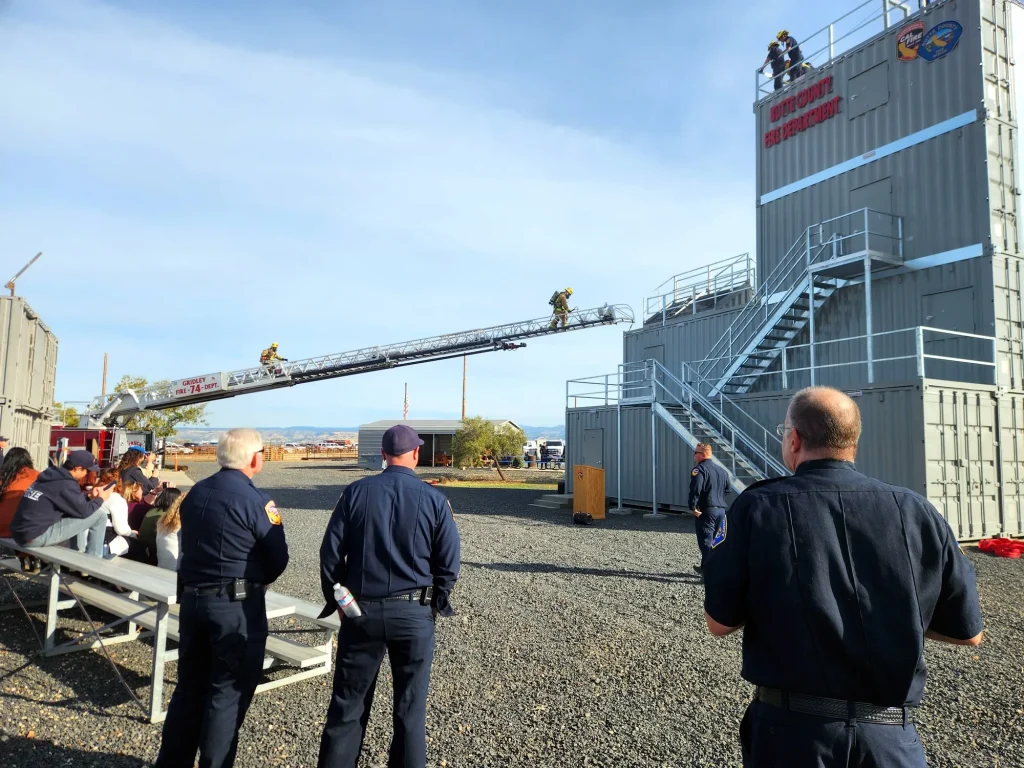
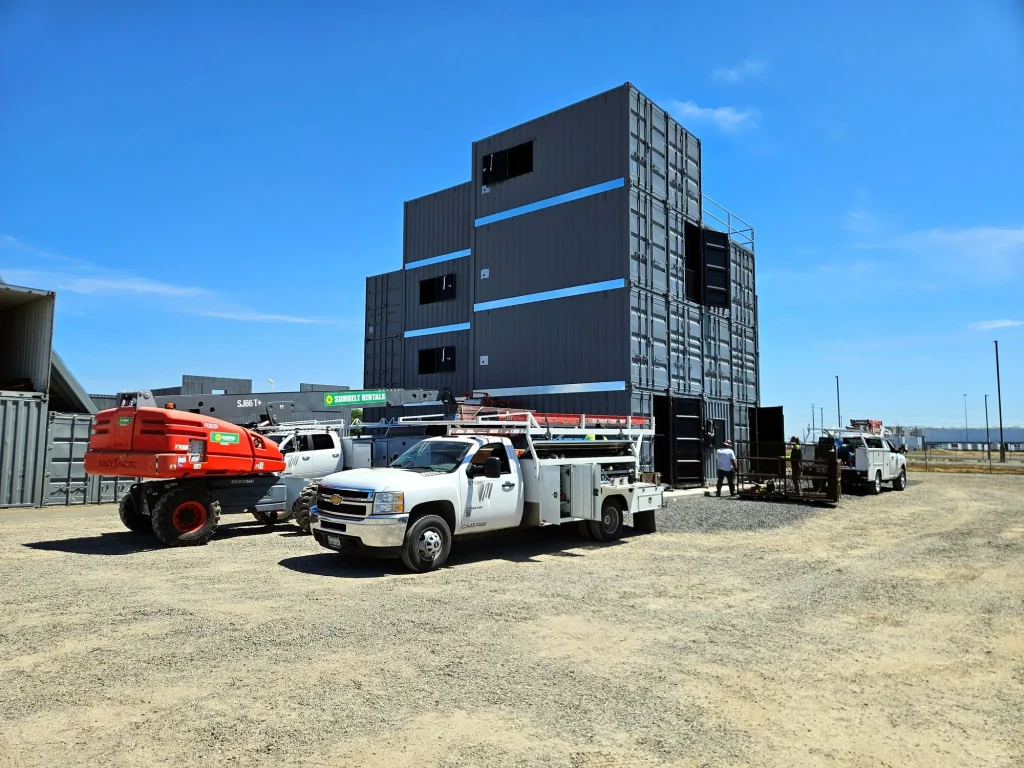
NFPA 1403 requires live fire training structures to meet defined standards for structural integrity, egress, suppression water supply, heat monitoring, ventilation, and pre-evolution documentation. These requirements apply to purpose-built towers, burn buildings, mobile units, and acquired structures alike.
Whether you’re building a multi-story tower, a mobile burn unit, or a series of Class B props, NFPA 1403 structural requirements fall into several categories:
Structural Integrity
Engineered steel construction, proper foundation, and regular inspection protocols. The structure must handle repeated live fire evolutions without compromise.
Egress and Access
Minimum two means of egress from any occupied area. Doors open outward from fire areas. Stairwells are protected. Suppression crew access is maintained throughout every evolution.
Suppression Systems
Multi-story towers require standpipe systems. Water supply must meet calculated demand for supported scenarios — specific flow rates and duration are defined by prop type and size.
Heat Monitoring
Automatic heat detection is required in burn rooms and occupied fire areas. Systems must be capable of triggering an abort if temperature limits are exceeded.
Ventilation and Smoke Evacuation
Smoke management isn’t optional — it’s engineered into the structure based on the specific evolutions it will support.
Documentation and Pre-Evolution Inspection
Safety plans, water supply calculations, fuel load documentation, and instructor qualifications must all be documented and on file before any evolution runs.
Every structure starts with engineering — not estimation. What that looks like in practice:
Stump has built training structures for Cal-Fire, the San Francisco Fire Department, and fire training partners across the country. The structures are in use. They hold up. Matthew Stump and his team will walk through NFPA 1403 requirements with you before a single drawing is made.
NFPA 1403 requirements vary based on the specific evolutions a structure will host. Common scenarios Stump designs for:
Structural firefighting: room search and clearing, forced entry, hose advancement, riser and standpipe operation
Technical rescue: confined space shaft rescue, basement rescue, rappelling, rope operations
Aerial and roof: helicopter airlift simulation, balcony rescue, sloped roof operations
Ventilation: positive and negative pressure, smoke movement and containment
Live fire — Class A and Class B: flashover chamber training, vehicle fire simulation, industrial hazard props
Each scenario carries its own NFPA 1403 structural requirements. Stump can engineer for one or all of them — the design starts with your training objectives.
If your department is planning live fire training structures to support these evolutions, see how Stump MFG engineers full-burn facilities from the ground up.
Training structures built to NFPA 1403 can serve more than one department. Many Stump clients build shared facilities used by multiple fire companies, law enforcement tactical teams, or combined fire and SWAT operations. If you’re planning a shared-use facility, the design phase needs to account for both NFPA 1403 fire training requirements and any tactical law enforcement scenarios. Stump plans for both from the start.
NFPA 1403-compliant training facilities vary widely in scope. The factors that most directly affect cost and timeline:
Budget ranges typically run from under $150K for simpler single-purpose props to $250K+ for multi-story, multi-scenario towers. Stump works through all of it during the planning phase — before anything is designed or priced.
Many departments use federal and state funding to offset these costs. See our guide to fire department grants for training infrastructure.
Departments building dedicated fire behavior training capability should also see our custom flashover chambers.
Get a straight answer on what your department needs, what it will cost, and what the timeline looks like.
Or call us directly: (209) 596-4029
Mon–Fri, 7 AM – 3:30 PM PT
NFPA 1403 governs live fire training evolutions — any training where fire is actually ignited, whether in an acquired structure, a purpose-built facility, or a prop. Dry drills and non-live simulations aren’t covered by 1403, though other NFPA standards may apply.
NFPA standards aren’t federal law, but many states adopt 1403 by reference in their fire training regulations. Non-compliance also creates significant liability exposure for departments and municipalities — and most fire training insurance policies require adherence to the standard.
An acquired structure is a building donated or condemned for a single-use live fire exercise — burned once, then demolished. NFPA 1403 has specific pre-burn inspection and fuel load requirements for these. A purpose-built training facility is engineered to run hundreds of evolutions over decades — a completely different design standard.
It depends on complexity. A single-story burn building can be delivered in a few months; a multi-story tower with full prop integration typically runs 6–12 months from design approval to delivery. Stump provides a project timeline during the planning phase.
Yes. Local codes and NFPA 1403 occasionally differ — Stump’s engineering process accounts for both. Where they conflict, the more stringent requirement governs. Any conflicts are flagged during design before they become problems in the field.